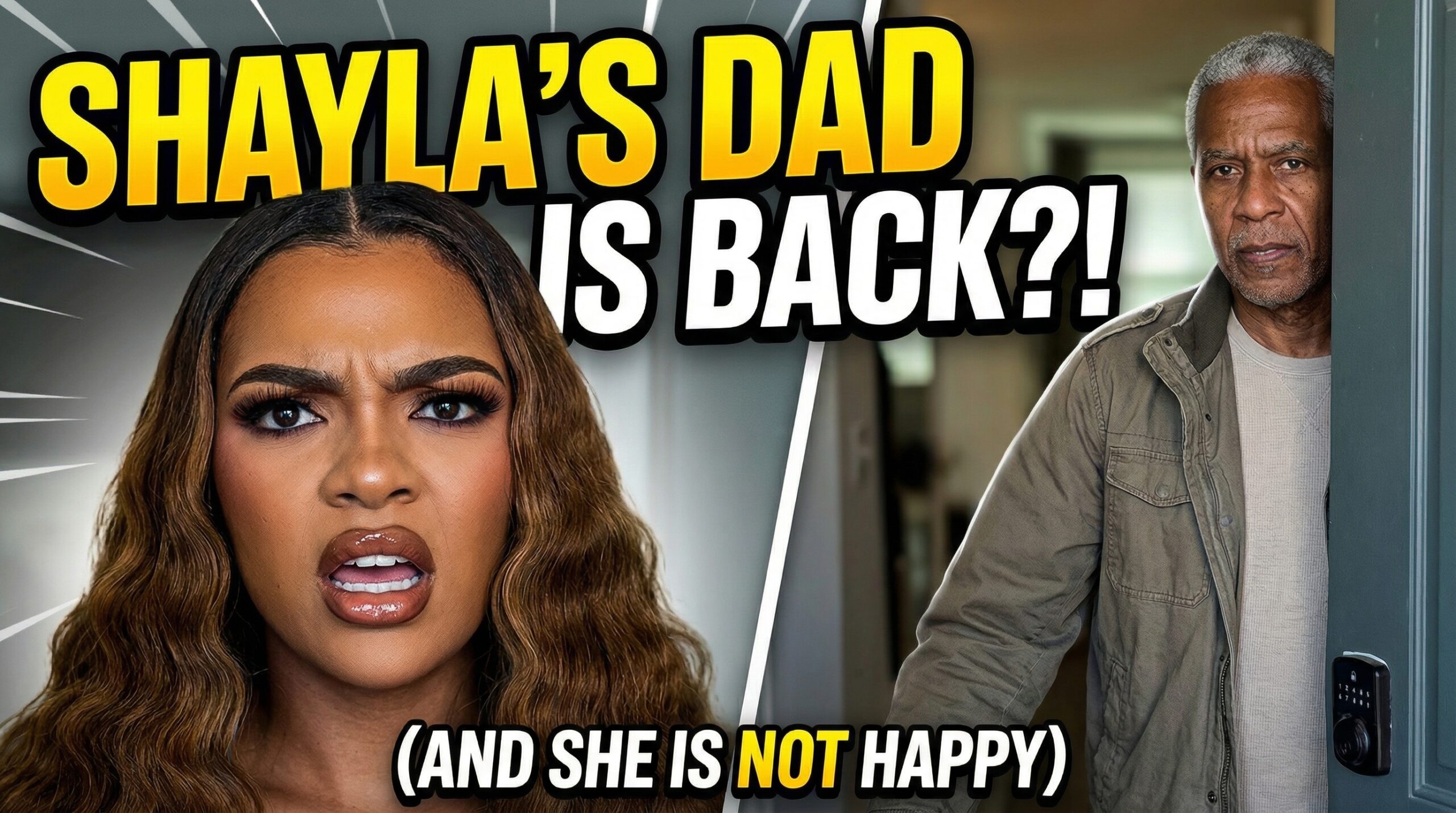

The Shadow of a Father: When “In the Neighborhood” Isn’t Enough
Family is supposed to be the one constant in a world that never stops moving. But for Shayla, family has often felt more like a series of question marks and missed connections. The recent morning when her father showed up at her doorstep wasn’t a heartwarming reunion; it was a collision between a daughter’s hard-earned boundaries and a father’s sudden, convenient urge to be present.
The Unwelcome Wake-Up Call
There is a specific kind of dread that comes with an unexpected knock early in the morning. It’s rarely good news, and it’s almost never a casual visit. When Shayla opened her door to find her father standing there, the shock wasn’t just about his physical presence—it was about the audacity of the timing.
His opening line was the classic “I was just in the neighborhood.” It’s a phrase used by people who want to minimize the weight of their absence, as if popping by for a visit is as casual as grabbing a coffee. But Shayla, sharp and protective of the peace she’s built, didn’t buy it for a second. She knew he had never been in that neighborhood before. The truth was thinner than the excuse: he was there because someone else gave him the address.
Counting the Months of Silence
The most painful part of an absent parent isn’t the distance; it’s the calendar. Shayla didn’t just feel his absence; she had calculated it. She pointed out with surgical precision that the last time he bothered to show up was when her son, Kai, turned one.
To a child, months are an eternity. To a mother, every month a grandparent misses is a milestone lost that can never be recovered. When a father says he’s “been around” but hasn’t been around his own family, it raises the question: who was he being a father to? His vagueness wasn’t just a sign of privacy; to Shayla, it felt like a dismissal of the life she was currently living.

The Ghost of Mom’s House
As the tension escalated, the conversation drifted into the murky waters of the past. Shayla brought up a previous encounter at her mother’s house involving a man named Diesel. This wasn’t just a random memory; it was a reminder of why the walls were up in the first place.
Every family has a “Diesel”—a situation or a person that represents the chaos one side of the family brings into the other’s peace. By referencing that day, Shayla was reminding her father that his track record wasn’t just one of absence, but of drama. She wasn’t just protecting her morning; she was protecting her environment from a cycle of inconsistency that had clearly played out before.
The “Grandchild” Card
When an absent parent feels the tide turning against them in a conversation, they almost always play the ultimate trump card: the grandchild. Her father quickly shifted the focus, asking where Kai was and stating he just wanted to “check on his grandson.”
It’s a powerful move because it makes the adult child feel like the “villain” for standing in the way of a family bond. But Shayla saw through it. You don’t get to skip the chapters of being a father and jump straight into the highlights of being a grandfather. The title of “Grandpa” is earned through the consistency of being a “Dad,” and in Shayla’s eyes, those dues hadn’t been paid in a very long time.
Drawing the Line at the Doorstep
The most telling moment of the entire encounter was the physical boundary Shayla set. Her father asked the inevitable question: “Can we go in?”
In many cultures and families, the answer would be a hesitant “yes” out of obligation. But Shayla stood her ground. “Let’s talk here,” she replied. By keeping him on the porch, she was sending a clear message: You have access to my words, but you no longer have access to my home. A home is a sanctuary, especially for a single mother. It is the place where she doesn’t have to defend herself or explain her choices. Letting him inside would have given him a level of intimacy he hadn’t earned. The porch was the middle ground—the place for people who are “just in the neighborhood” but not yet in the heart.
The Reality of Modern Forgiveness
We live in a culture that often tells people to “forgive and forget” because “life is short.” But stories like Shayla’s remind us that forgiveness doesn’t always mean a return to the way things were. Sometimes, forgiveness is simply acknowledging that someone is a part of your history without letting them control your future.
As the sun climbed higher, the standoff continued. A father trying to bridge a gap with words, and a daughter guarding that gap with memories. Whether this visit marks the beginning of a real change or just another “stop by” in a long line of disappointments remains to be seen. But one thing was certain: Shayla is no longer the little girl waiting by the window. She’s the woman holding the door shut until she sees proof that things are actually different.
Leave a Reply